
Sinus Lift and Implant Rehabilitation - Case #1
Lateral Window Sinus Augmentation and Implant Placement in the Posterior Maxilla
Bone loss in the upper back jaw can make implant placement challenging due to proximity to the maxillary sinus. This case demonstrates a lateral window sinus lift performed to regenerate bone volume and enable long-term implant stability and function.
A patient presented with missing upper left posterior teeth and significant bone loss beneath the sinus cavity — a condition that made implant placement impossible without bone regeneration.
For such cases, Dr. Onur Cavus’s goal is to restore function and stability by rebuilding bone volume through a sinus lift procedure while minimizing overall treatment time.
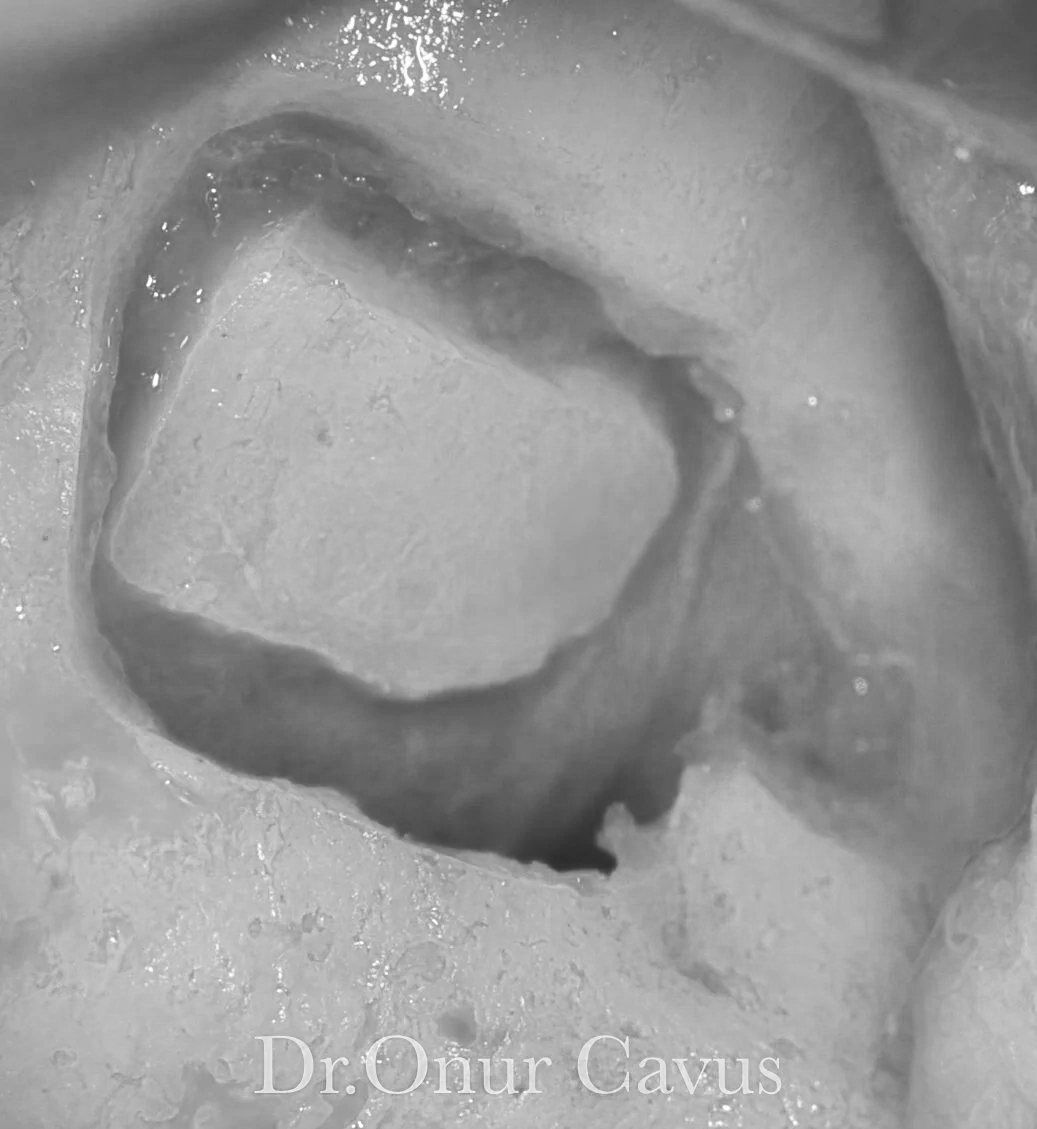
During surgery, a lateral window sinus lift was performed to elevate the sinus membrane and create space for bone grafting. Two dental implants were placed simultaneously, achieving primary stability in the remaining alveolar ridge. The graft material — a blend of particulate allograft and xenograft — was carefully packed around the implant sites to support new bone formation and maintain sinus integrity.
After healing, CBCT and panoramic imaging confirmed successful bone regeneration and implant integration. The case demonstrates how simultaneous implant placement during sinus augmentation can restore posterior support efficiently while ensuring long-term functional and biological success.
⚠️ This gallery includes real surgical and radiographic images shared for educational purposes. Some images may contain graphic clinical content.
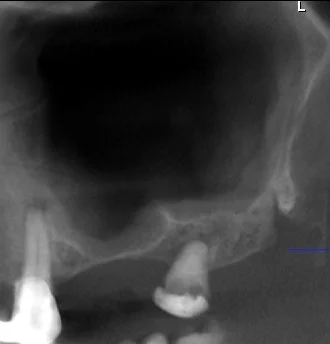
Panoramic radiograph showing severe bone resorption and sinus pneumatization in the upper left posterior maxilla, limiting available bone height for implant placement.
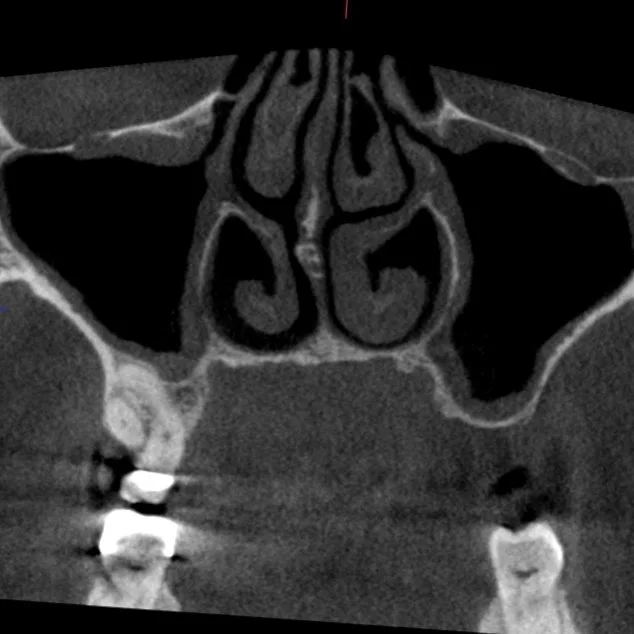
CBCT image demonstrating reduced vertical bone height beneath the maxillary sinus and close proximity between the sinus floor and alveolar crest.
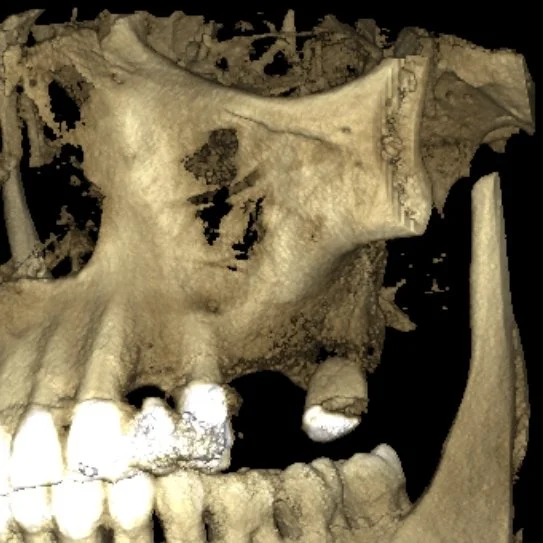
3D reconstructed CBCT view illustrating the extent of sinus pneumatization and residual ridge anatomy in the upper left posterior region prior to grafting.
Panoramic radiograph showing severe bone resorption and sinus pneumatization in the upper left posterior maxilla, limiting available bone height for implant placement.
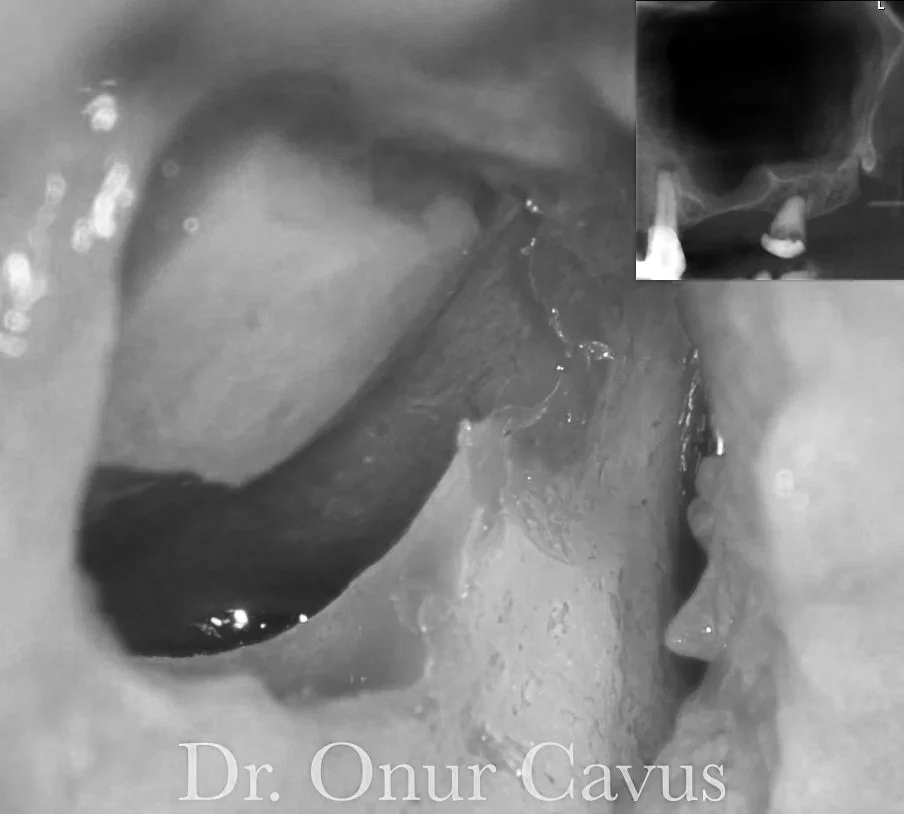
Clinical image showing lateral window access and controlled elevation of the sinus membrane, with inset panoramic view confirming pre-operative bone limitation.
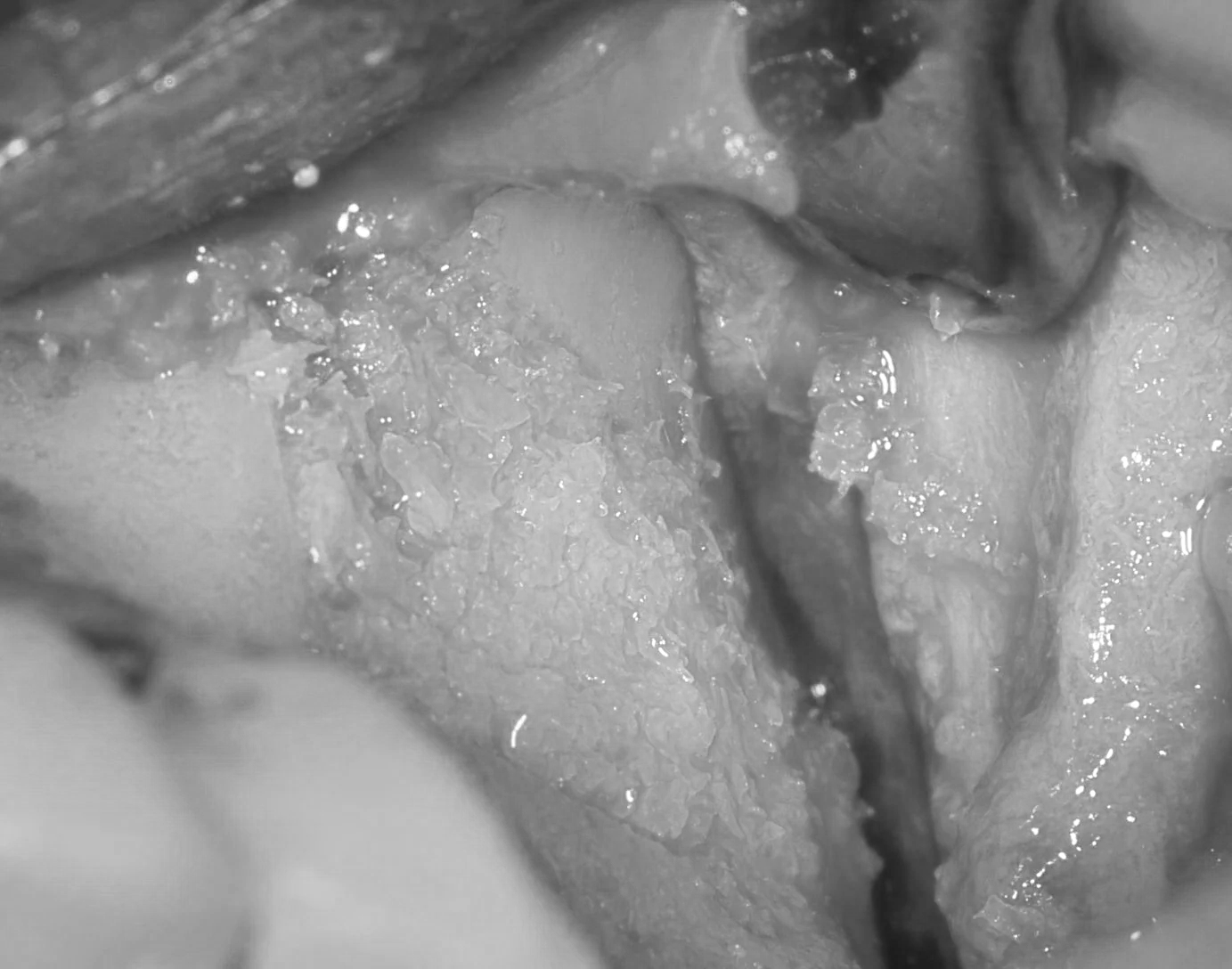
Placement of particulate bone graft material beneath the elevated sinus membrane, creating the new sub-sinus bone chamber for implant support.
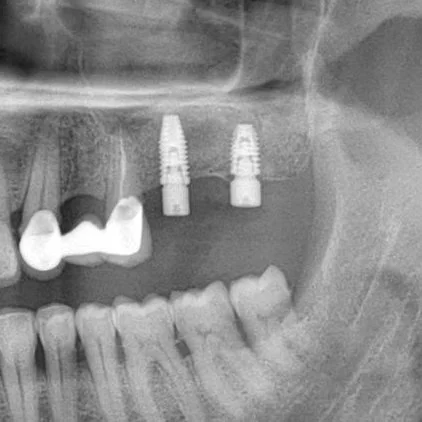
Panoramic radiograph confirming stable graft integration and successful implant placement in the posterior maxilla.
Case Overview
Patient Concern:
Missing upper left posterior teeth with insufficient bone height for implant placement due to sinus pneumatization.
Treatment Goals:
Restore chewing function and bone volume for future implant placement while maintaining sinus health and stability.
Main Procedures:
Lateral window sinus lift, bone grafting with particulate allograft, and staged dental implant placement after healing.
Key Takeaways
Lateral window sinus lifting remains the most predictable method for significant vertical bone gain in posterior maxilla.
Maintaining sinus membrane integrity is essential for graft success.
Proper graft material selection and healing time are critical for long-term implant stability.
Related Topics - Internal Links
Treatment Approach
1. Preoperative Assessment
A CBCT scan confirmed minimal residual bone height beneath the sinus floor. The case required a lateral window approach to create space for graft material and future implant support.
2. Lateral Window Sinus Lift
A lateral bony window was carefully created to access the sinus membrane. Using microsurgical techniques, the Schneiderian membrane was gently elevated to form a grafting cavity.
3. Simultaneous Implant Placement
Two implants were placed during the same surgical procedure, engaging the residual alveolar bone for primary stability. This simultaneous approach allowed both the implants and graft to heal together, reducing overall treatment time while maintaining predictable outcomes.
4. Bone Grafting
The newly created sinus cavity and the surrounding implant sites were filled with a mixture of particulate allograft and xenograft materials. This ensured stable bone regeneration around the implant surfaces and under the elevated sinus membrane. A resorbable collagen membrane was positioned over the lateral window to protect the graft and support guided bone regeneration. The site was then sutured for tension-free primary closure.
5. Healing and Follow-Up
Postoperative Xray confirmed stable graft volume and intact sinus integrity. Healing was uneventful, with follow-up radiographs showing excellent graft integration and progressive osseointegration of both implants.
Interested in sinus lift or bone grafting in Toronto or North York?
Schedule your consultation with Dr. Onur Cavus — a general dentist certified in IV sedation and experienced in sinus augmentation, bone regeneration, and implant rehabilitation.
Case FAQs — Sinus Lift with Simultaneous Implant Placement
The patient had significant sinus pneumatization and limited bone height in the upper back jaw. A sinus lift was performed to create sufficient bone volume for stable implant placement and long-term function.
It means the implants were placed at the same time as the sinus lift procedure. When enough residual bone exists to achieve primary stability, placing implants simultaneously reduces overall treatment time and avoids a second surgery.
A lateral window approach was used to access and gently elevate the Schneiderian membrane using microsurgical instruments. If needed, a collagen membrane was placed to reinforce the sinus lining before adding bone graft material.
A particulate bone graft blend was carefully packed beneath the elevated sinus membrane and around the implants to promote new bone formation and maintain the augmented volume over time.
Initial soft-tissue healing takes about two weeks. Full graft consolidation and implant osseointegration typically occur over four to six months before the final restoration is placed.
Patients should avoid blowing their nose, sneezing with the mouth closed, using straws, smoking, or heavy lifting for at least two weeks. These precautions help protect the sinus membrane and graft during early healing.
Minor swelling, sinus pressure, or mild bleeding can occur temporarily. Membrane perforation is rare and usually repaired immediately. With proper care, infection or graft failure is uncommon.
Healing and graft integration are confirmed through follow-up examinations and imaging, such as panoramic or CBCT scans, to ensure full bone formation and implant stability before final crown placement.